"Great company, great pilots and staff. We had an amazing experience. We will be back one day for sure :)"
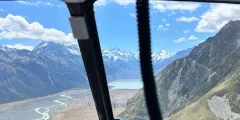
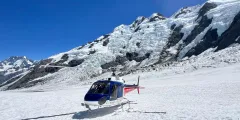
Snow Landings
Which flights put you on snow, and in which months.
Book Your Experience
Select your preferred date and time. Instant confirmation — free cancellation up to 24 hours before departure.
The Experience
Forty minutes past the Hochstetter Icefall and the upper Tasman Glacier, with a landing in the snow, from $374 per person.
Four steps from booking to standing in the snow above the Tasman Glacier.
Reserve on GetYourGuide from $374 per person with free cancellation up to 24 hours before. The Helicopter Line asks you to reconfirm 24 hours ahead and call an hour before for the final weather check.
The Helicopter Line flies from its base at Glentanner Park on State Highway 80, south of Mount Cook Village. Transport from the village can be provided, and check-in closes 30 minutes before departure.
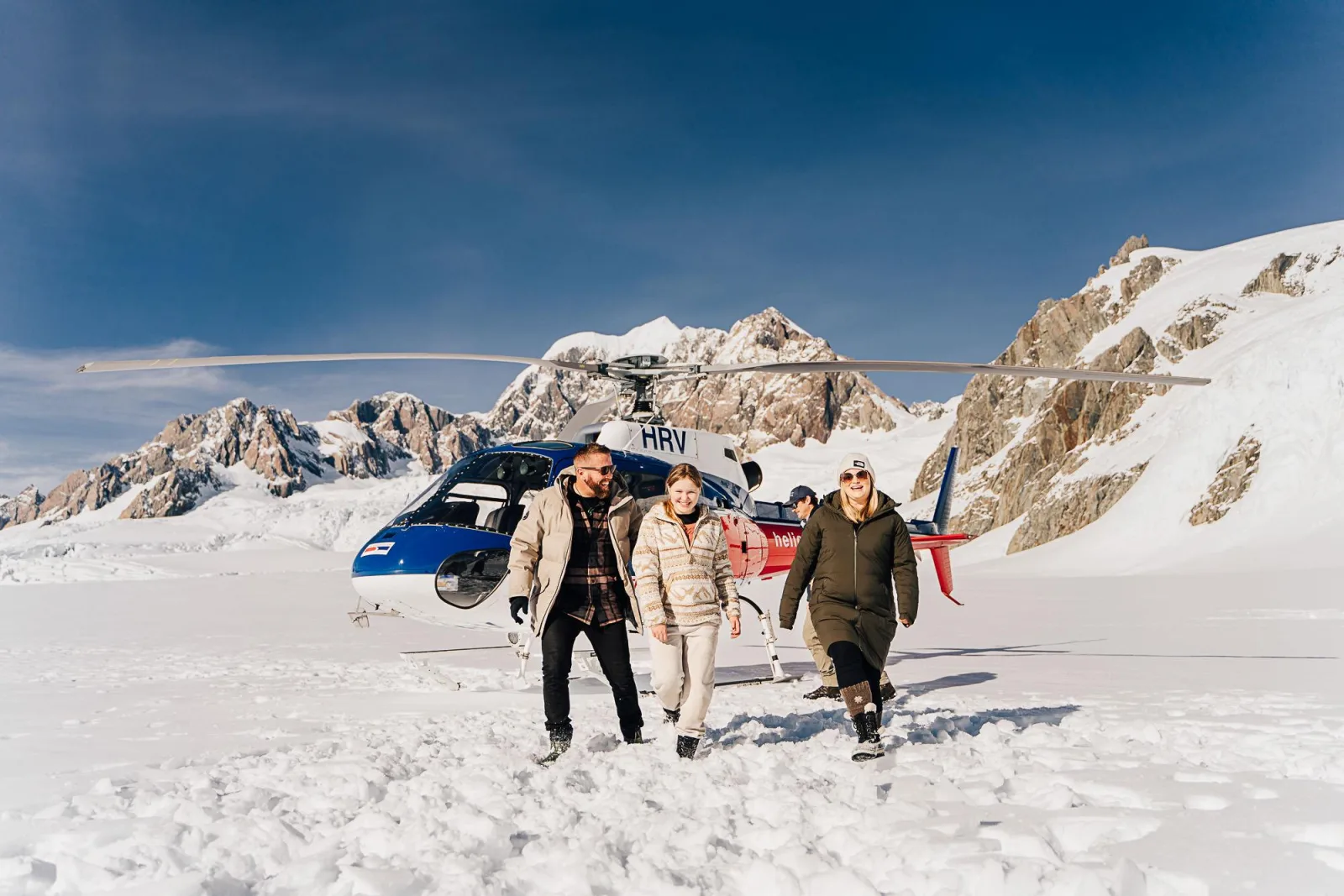
Pass the Hochstetter Icefall on Aoraki and the upper Tasman Glacier, then land in the snow for photos and a breath of alpine air. The landing depends on snow levels on the day.
Fly home through the Burnett Mountains, which face Aoraki, with the dry Mackenzie Basin spread out below. The 40 minutes include the landing.
Can't Make These Dates?
Tasman Glacier heli-hikes, Lake Tekapo scenic flights and more ways to see Aoraki/Mount Cook, all with instant confirmation and free cancellation.
Photo Gallery
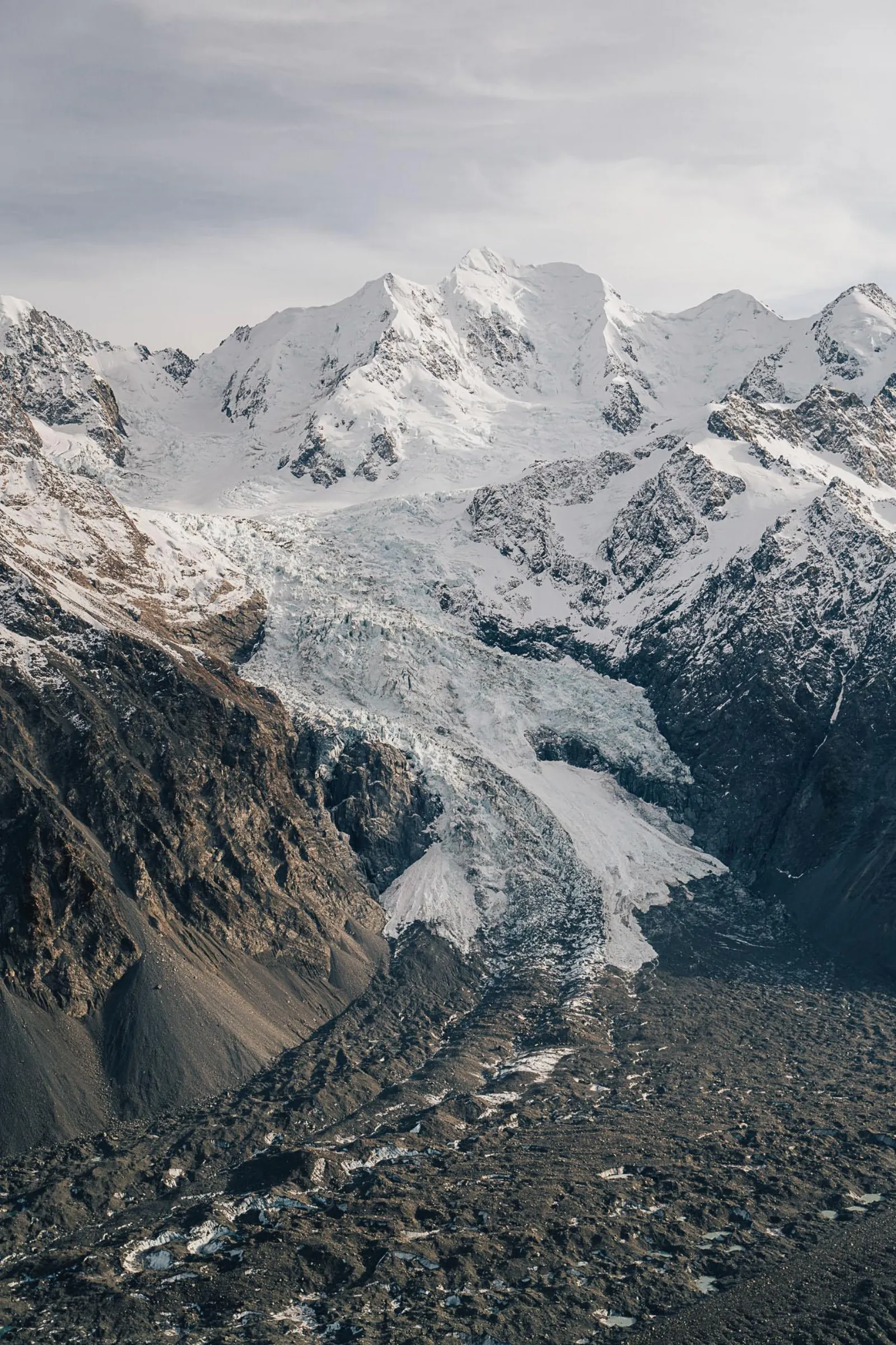
Snowfields, glaciers and the peaks around Aoraki where these flights land.
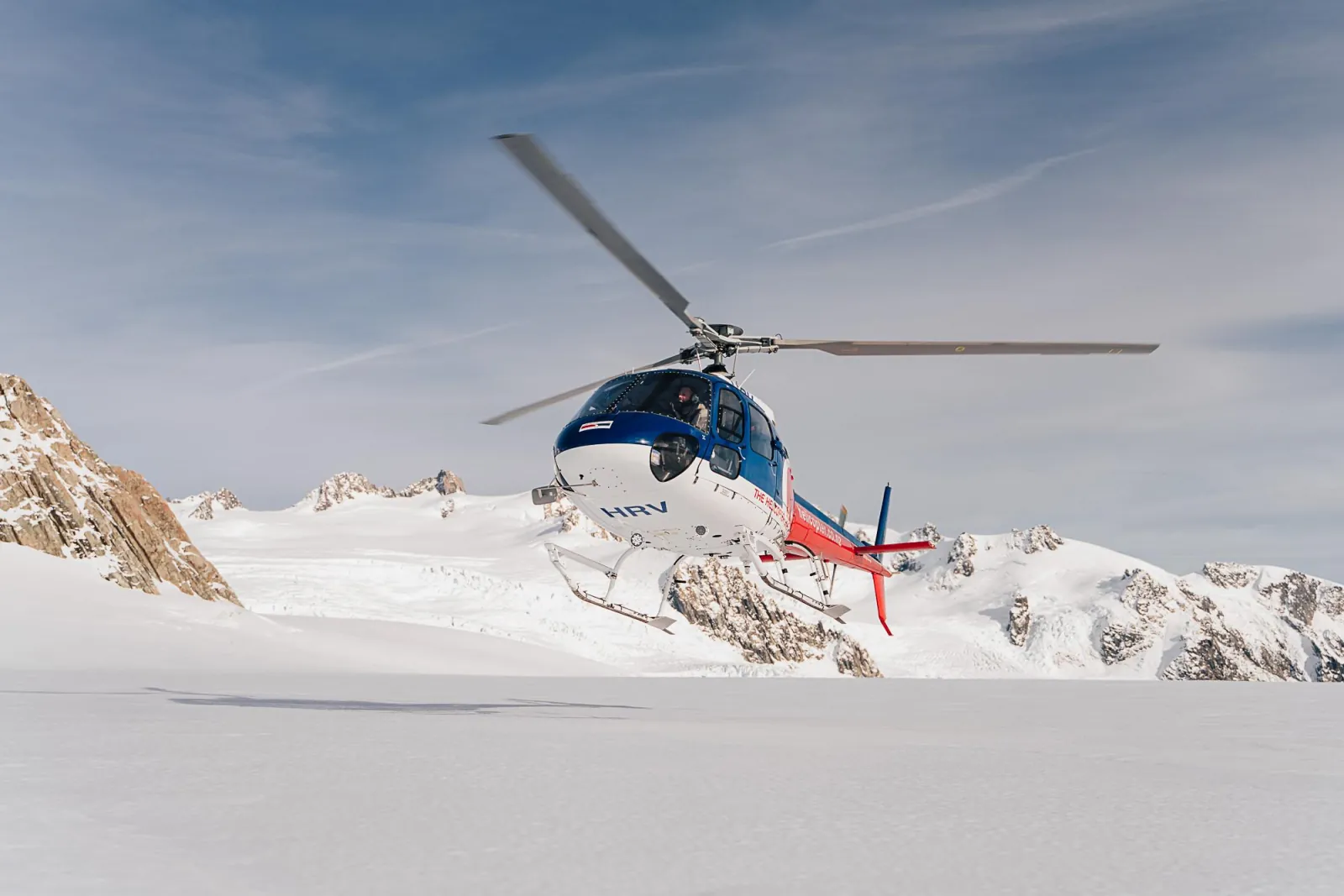
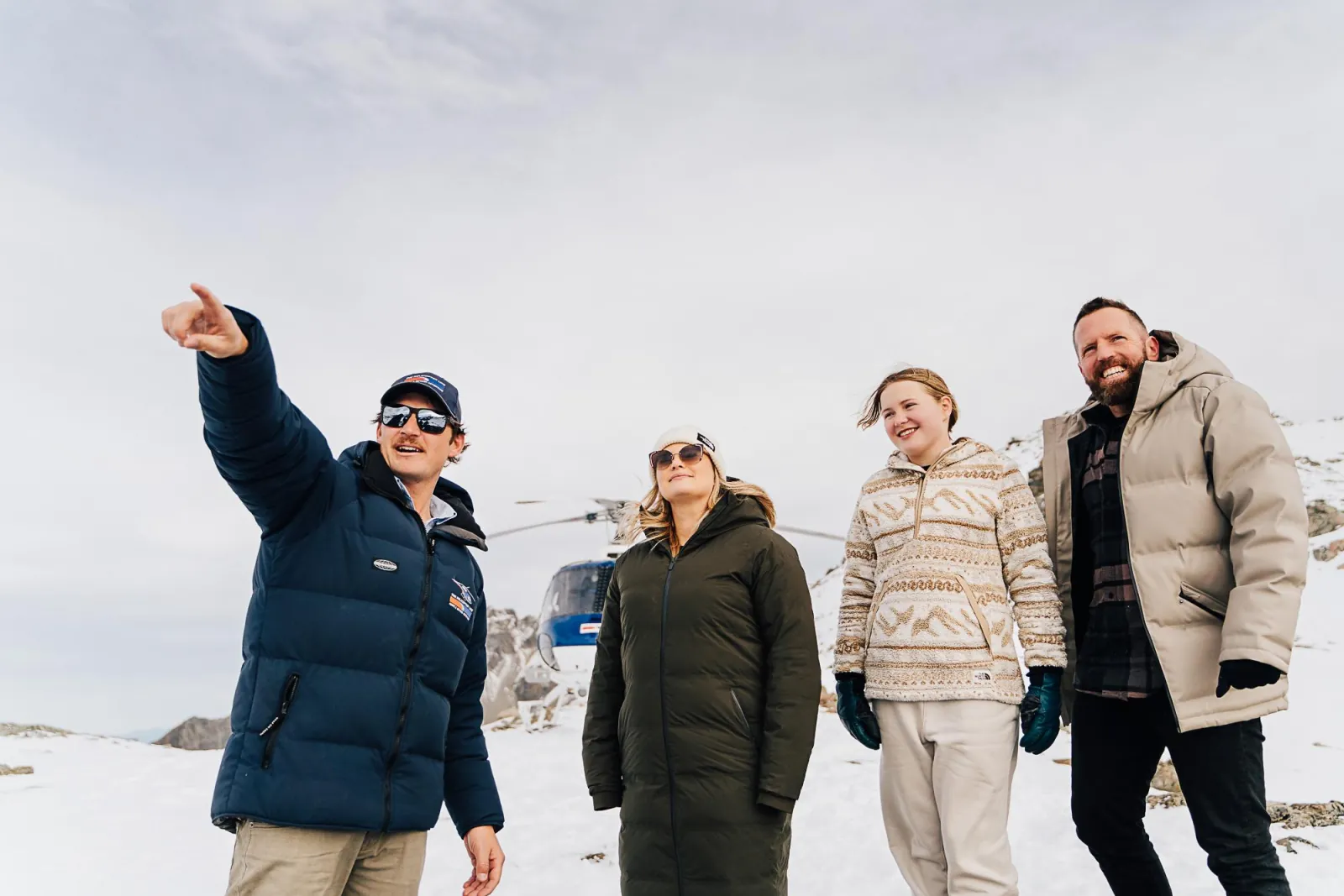
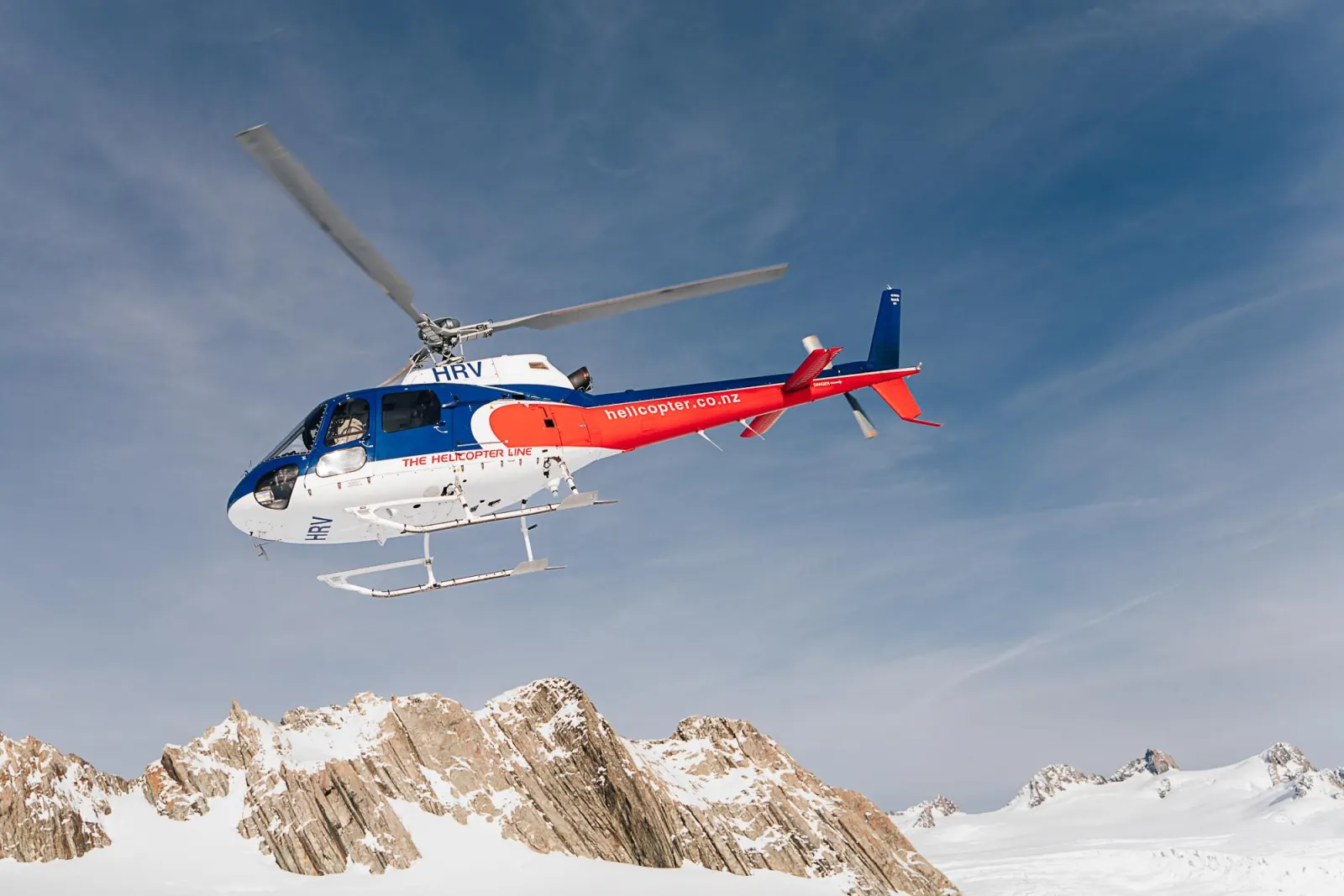
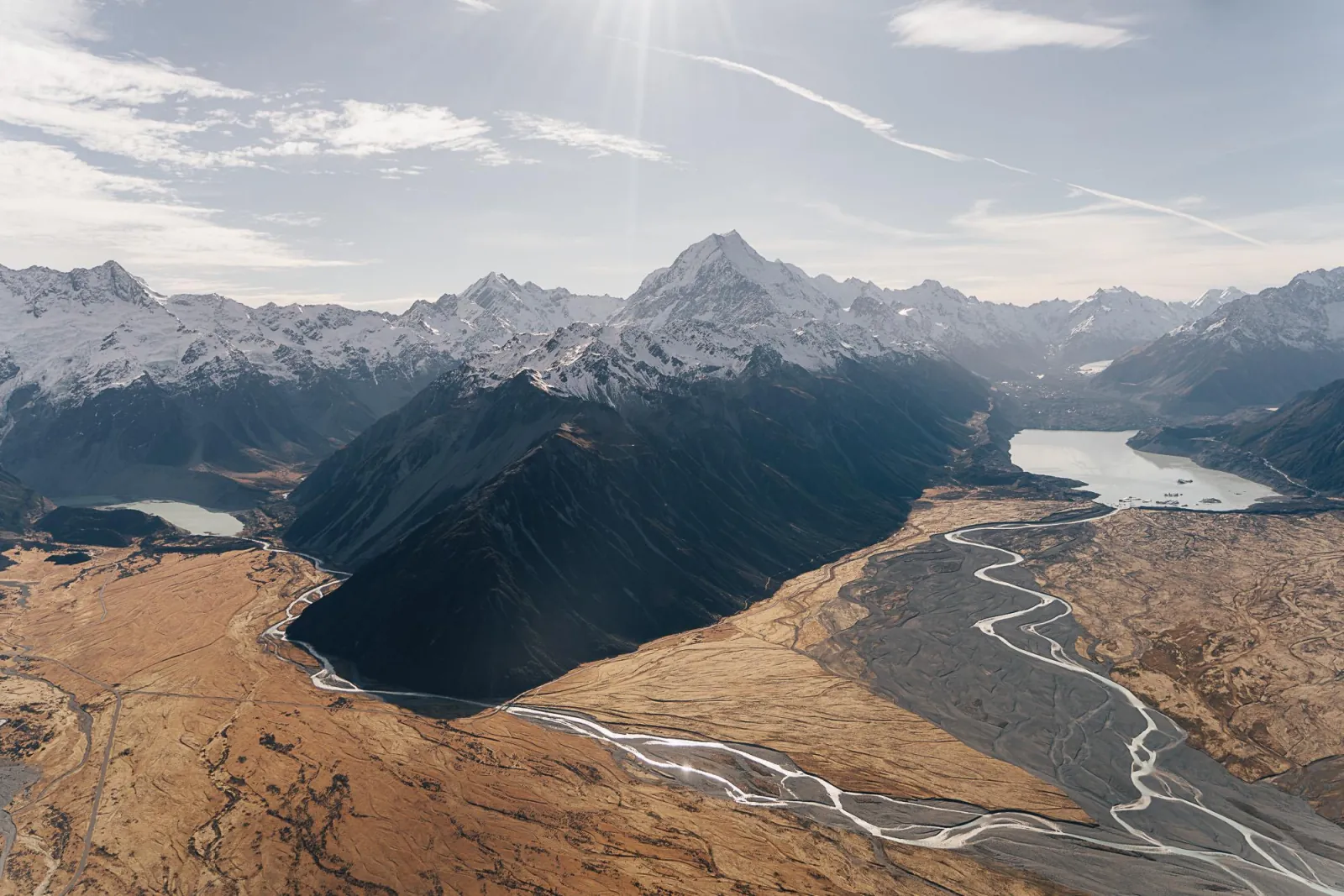
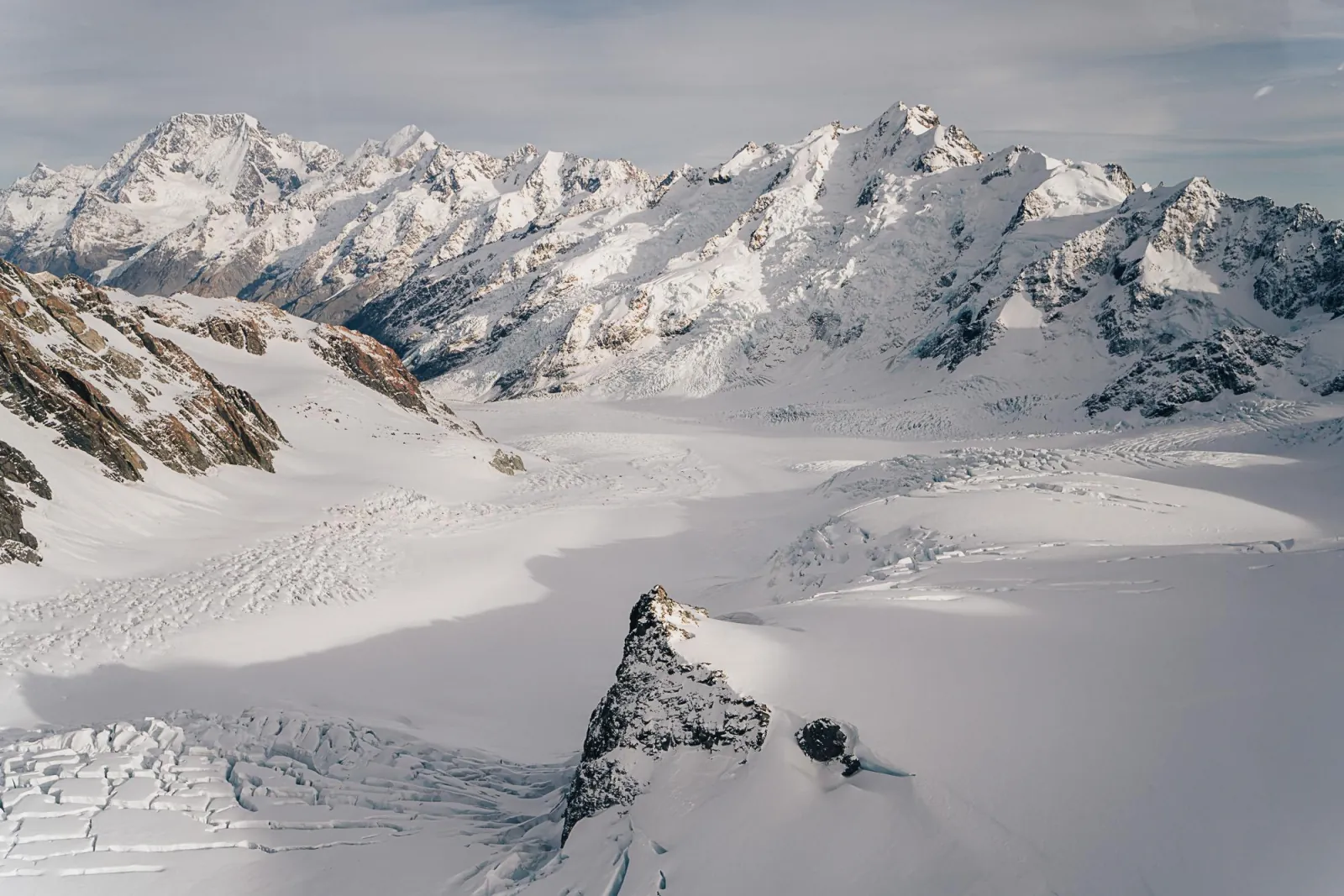
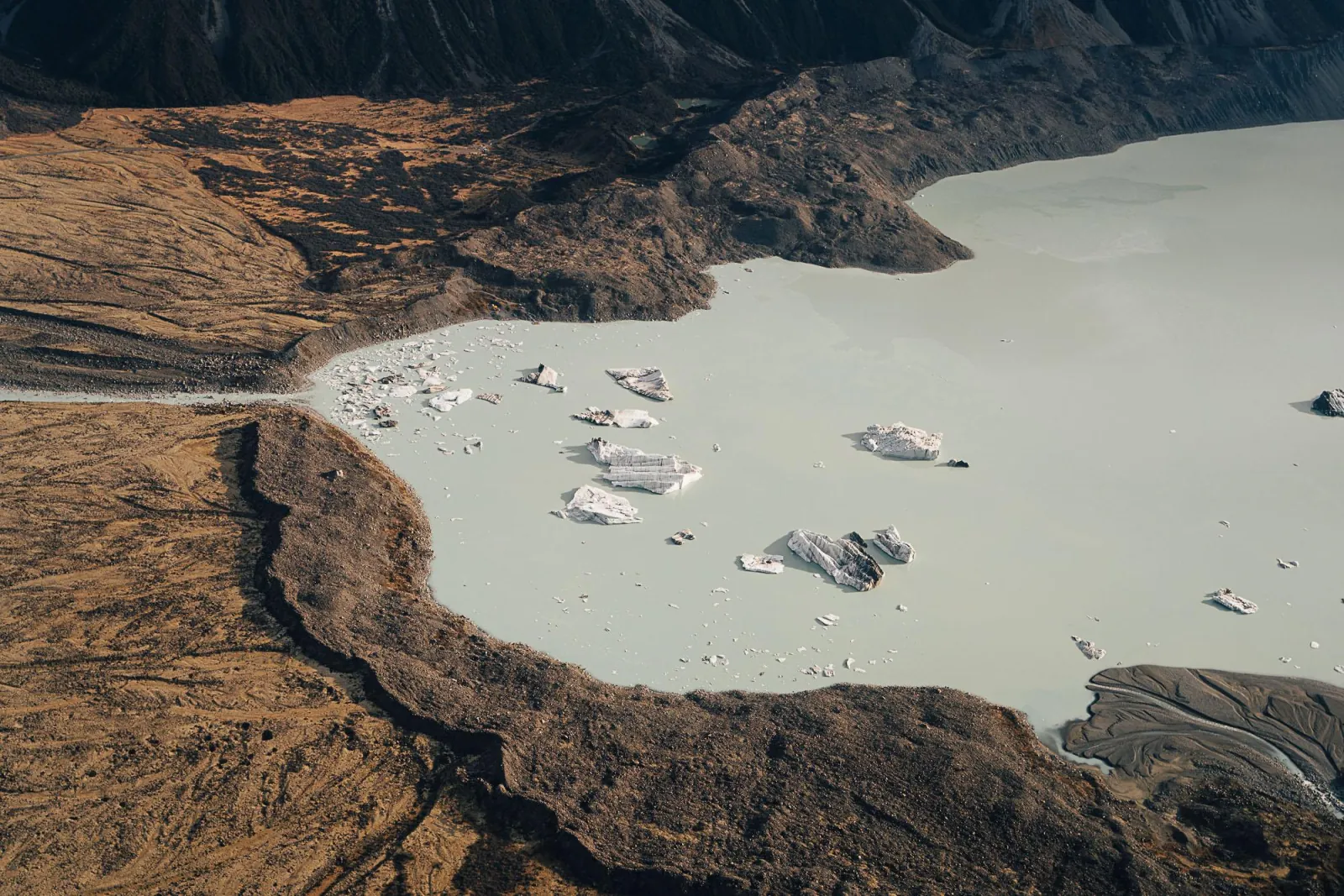
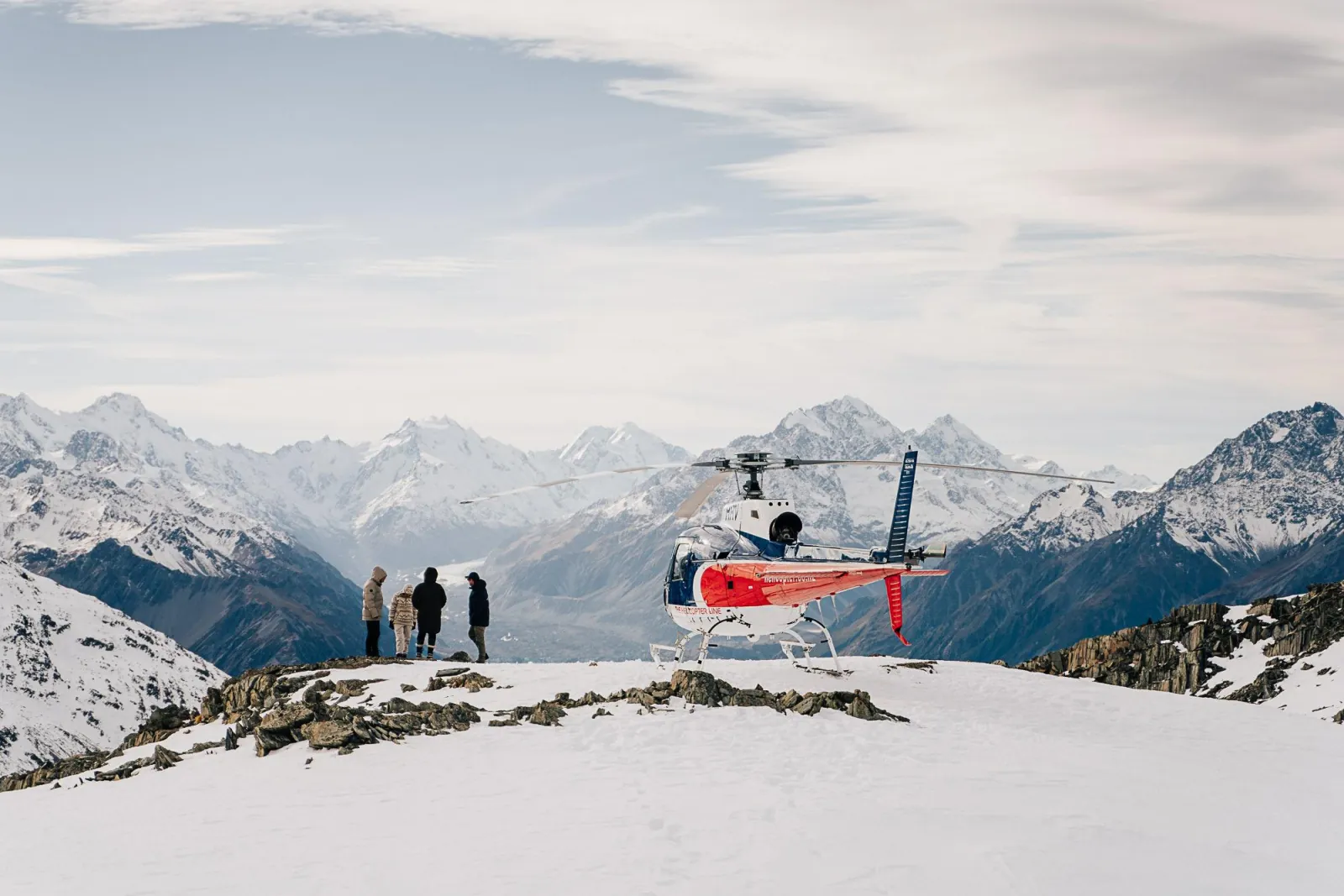
A snow landing from Glentanner, a year-round glacier landing and the cheapest alpine landing, side by side.
| Feature | SNOW LANDING Mountains High, 40 min | Ski Plane + Heli Combo | Alpine Landing, 25 min |
|---|---|---|---|
| Price from (USD per person) | $374 | $314 | $217 |
| Duration | 40 minutes | 45 minutes | 25 minutes |
| Operator and base | The Helicopter Line, Glentanner Park | INFLITE, Aoraki/Mount Cook Airport | INFLITE, Aoraki/Mount Cook Airport |
| Landing type | Snow landing, subject to snow levels | Glacier landing, upper Tasman Glacier | Alpine landing on a mountain site |
| Snow December to March | Subject to snow levels | ✓ Snow and ice all year | ✗ May be bare |
| Time on the snow | 5–10 minutes | 10–15 minutes | Not stated |
| Rating and reviews | 5.0 from 7 (61 more on Viator) | 4.7 from 378 | 4.7 from 530 |
| Getting there | ✓ Transport from the village can be provided | ✓ Free parking at the airport | Village pickup arranged with the operator |
| Check Availability | See the Combo | See the 25-Minute Flight |
Compare Flights
From a 25-minute alpine landing to a three-hour Tasman Glacier heli-hike.
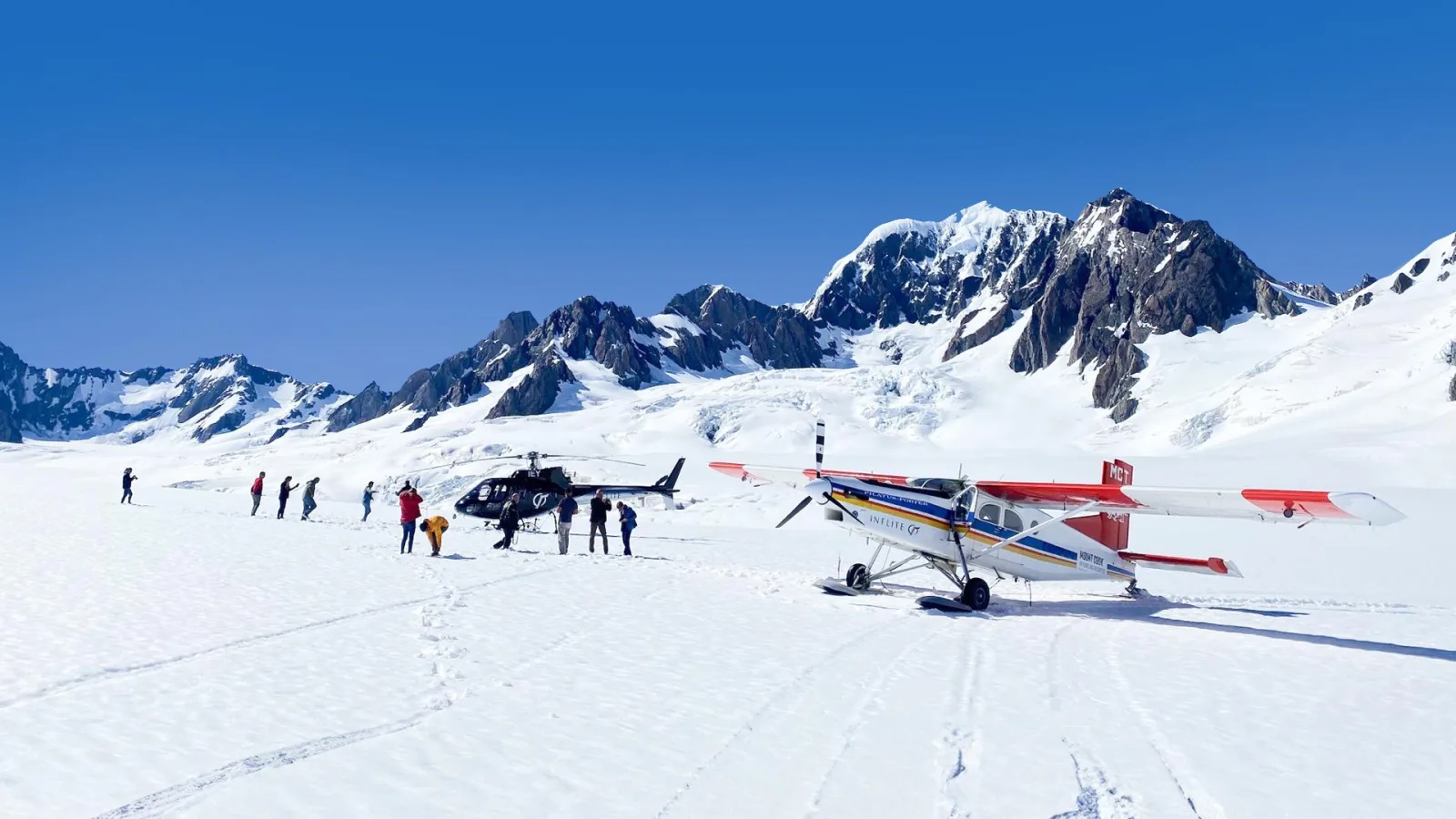 SKI PLANE + HELI
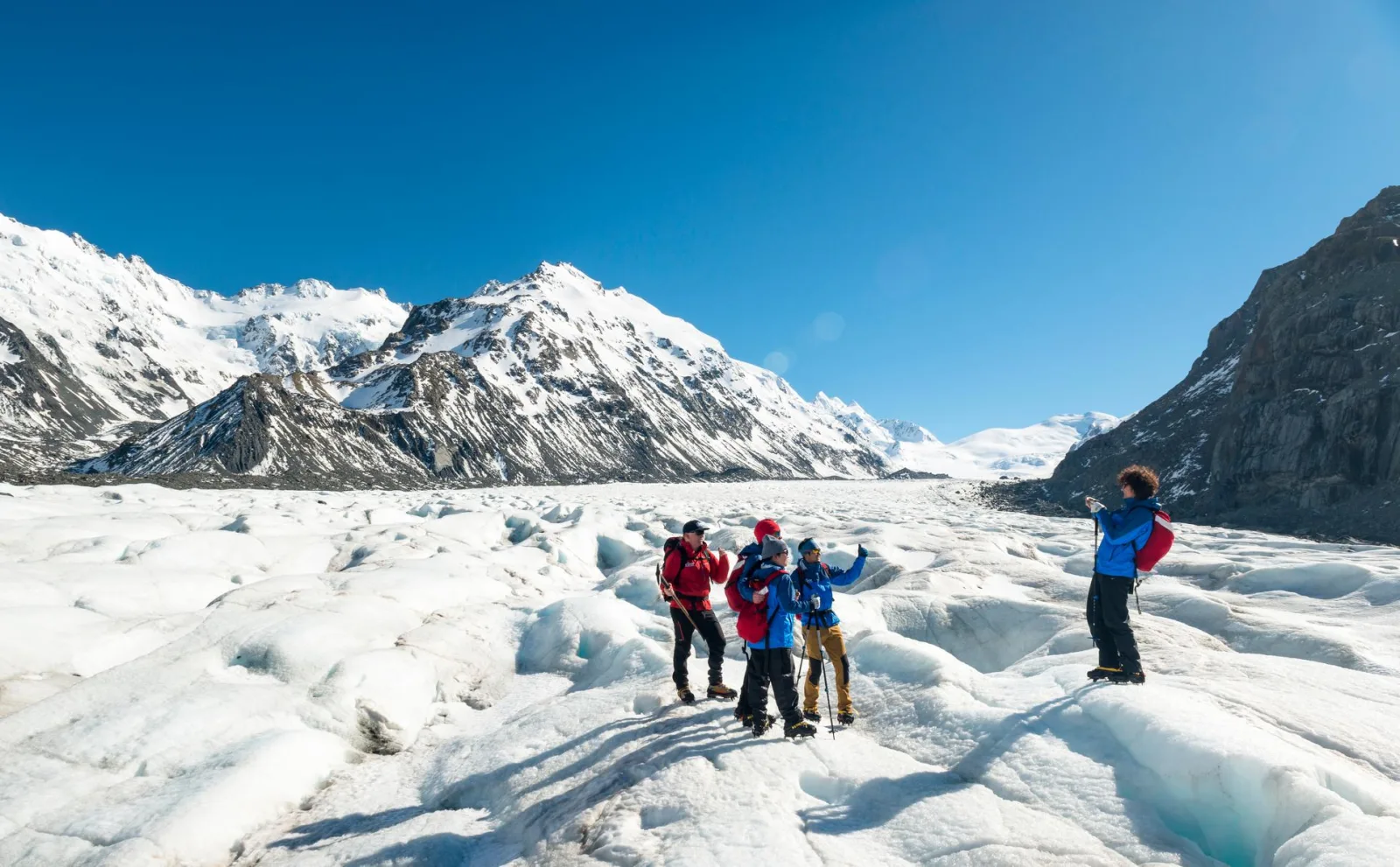 GLACIER WALK
 55 MINUTES
 SNOW LANDING
 FROM TEKAPO
Snow Landings
Alpine, snow and glacier landings, and the months each one is snowy.
For a helicopter snow landing from Glentanner, book The Helicopter Line’s Mountains High 40 minute Flight, from $374 per person. It flies past the Hochstetter Icefall and the upper Tasman Glacier, then lands in the snow, subject to snow levels on the day. If snow underfoot is the whole point, and especially if you are visiting between December and March, book a landing on the Tasman Glacier itself: INFLITE’s ski plane and helicopter combo, from $314, lands on upper snowfields that hold snow and ice all year. The rest of this guide covers what happens once the door opens, how long you get outside, what to wear and what changes with the season.
| Question | What to expect |
|---|---|
| Do you get out of the aircraft? | Yes, on every flight sold with a landing. |
| How long are you on the ground? | 6 to 15 minutes, depending on the operator and the flight. |
| Is the landing always on a glacier? | No. It may be an alpine landing on a mountain site or a landing on the glacier itself. |
| Is snow guaranteed? | Glacier landings have snow and ice all year. Some alpine sites can be bare in the warmer months. |
| Can you walk around? | Yes, within the area the pilot shows you. |
| Do you need special boots? | No. Sturdy closed shoes with a good grip are enough for a scenic landing. |
| Is it cold? | Colder than the airfield, by one to three degrees according to INFLITE, and windier. |
| Can children go? | Yes, on the operators’ child and infant rules. |
| Can the landing site change? | Yes. Weather, snow and safety decide the exact spot on the day. |
| Can the landing be cancelled? | Yes. Alpine weather changes quickly, in any season. |
If standing on snow is the reason you are booking, choose a flight that says Tasman Glacier landing or glacier landing, and do not rely on a plain alpine landing. INFLITE says its alpine landing sites can have little or no snow in the warmer months, while its glacier landings give you snow in every month.
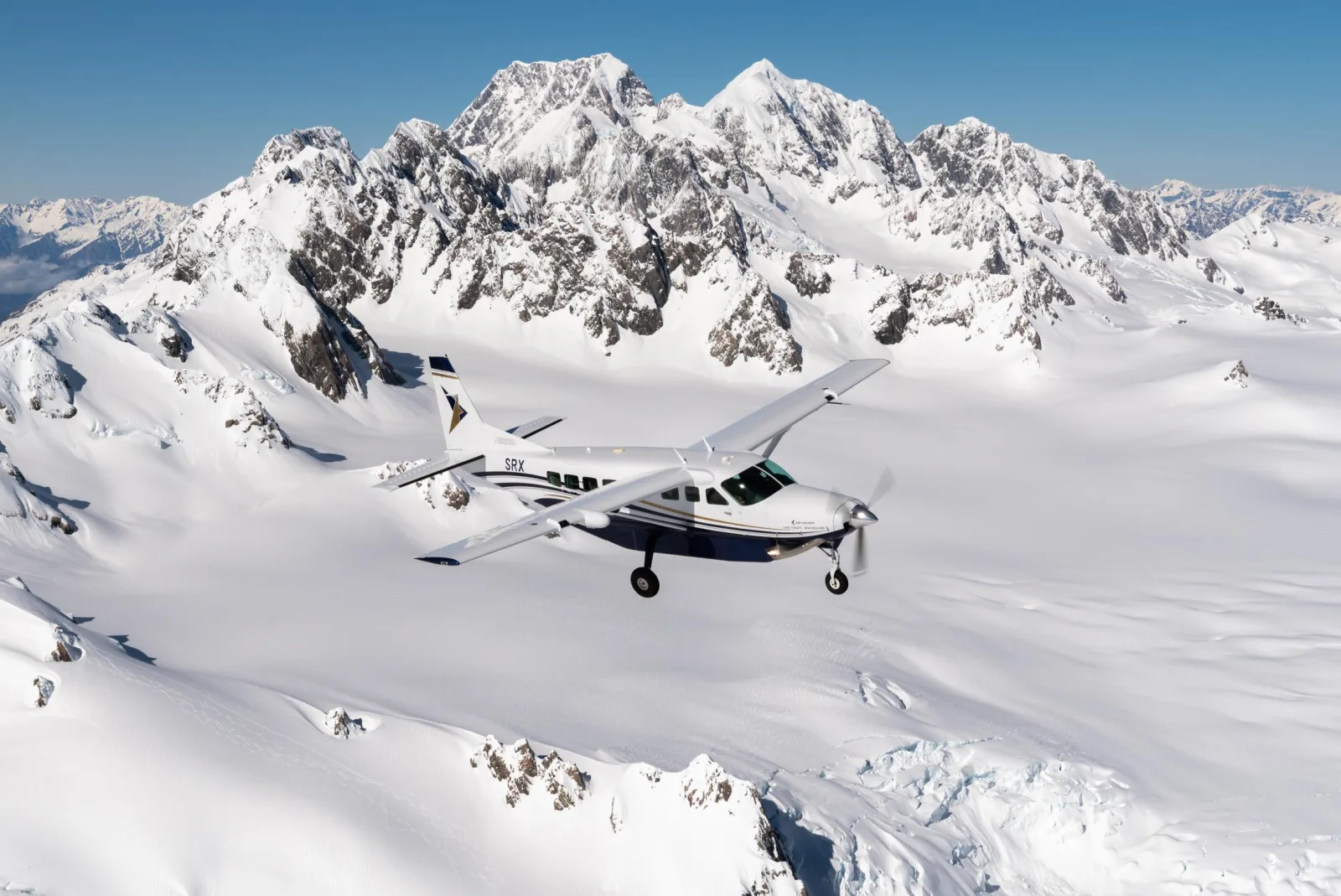
From inside a helicopter, even a glacier 23 km long can look oddly compact. Once you step out, the scale comes back. The first thing many passengers notice is the quiet. On INFLITE’s Ski Plane and Helicopter Glacier Combo Flight the aircraft shuts down on the Tasman Glacier, and you hear nothing but wind.
There are no roads, buildings or crowds up there. Depending on the site, you may see:
Photographs struggle to show how big it all is. For a first visit, a few minutes outside the aircraft often stays with people longer than an extra ten or twenty minutes in the air.
Operators use three phrases, and they mean different things.
The Helicopter Line’s flights all include a landing of some kind. Air Safaris’ Mount Cook and Beyond flight from Lake Tekapo does not list one, and neither does INFLITE’s 25-minute Aerial Explorer ski plane flight, NZ$349 and sold direct only. Those are overflights: you stay in the aircraft the whole time.
The wording overlaps because the landscape does. High on the Tasman the glacier is usually under snow, so a landing there is both a glacier landing and a snow landing. A helicopter can also land in snow on a mountain site that is not part of any glacier. Every snowy glacier landing is a snow landing, but a snow landing is not always on a glacier, so the question to ask of a listing is whether it names the Tasman Glacier.
The site is high and often snowy, but it is not on a glacier. The Helicopter Line’s 25-Minute Alpine Vista lands in the Ben Ohau Range, and the operator says snow there depends on the season. INFLITE’s 25-minute Tasman Taster, sold on GetYourGuide as the Scenic Helicopter Flight with Alpine Landing, makes the same kind of landing, and INFLITE warns the site may have no snow in the warmer months.
The aircraft lands on the glacier itself. At Mount Cook that usually means the upper Tasman Glacier, high enough to keep snow and ice all year. Some longer flights add more glaciers from the air: The Helicopter Line’s Aoraki & The Glaciers 55-minute flight crosses the Main Divide to look down on the Fox and Franz Josef glaciers.
| Alpine landing | Glacier landing | |
|---|---|---|
| Price | Usually cheaper | Usually more |
| Flight length | Often on 25 to 35-minute flights | Mostly 45 minutes and longer, plus one 25-minute ski plane flight |
| Snow all year | No | Yes, conditions permitting |
| Standing on a glacier | No | Yes |
| Suits a first helicopter ride | Yes | Yes |
| Suits travellers for whom snow is the point | Less so | Yes |
If you mainly want the helicopter ride and the mountain scenery, an alpine landing can be excellent. If the picture in your head is standing on white snow with huge peaks all around, read the wording and book a glacier landing. That one line in the listing saves a lot of disappointment.
| Flight | From | Landing | Dec–Mar | Apr–Nov | On the ground |
|---|---|---|---|---|---|
| Ski plane + helicopter combo | $314 | Tasman Glacier | Snow and ice | Snow and ice | 10–15 min |
| Glacier Highlights ski plane | $380 | Tasman Glacier | Snow and ice | Snow and ice | 10–15 min |
| Grand Circle, 55 min | $428 | Tasman Glacier | Snow and ice | Snow and ice | 10–15 min |
| Southern Lakes Tasman Glacier | $363 | Tasman Glacier | Glacier snow | Glacier snow | Not stated |
| Glacier Helicopters Tasman Glacier | $374 | Upper Tasman Glacier | Glacier snow | Glacier snow | Not stated |
| Mountains High, 40 min | $374 | Snow landing | Subject to snow levels | Subject to snow levels | 5–10 min |
| Aoraki & The Glaciers, 55 min | $500 | Snow landing | Subject to snow levels | Subject to snow levels | Not stated |
| INFLITE 25-min alpine landing | $217 | Alpine | May be bare | Usually snow | Not stated |
| Alpine Vista, 25 min | $220 | Alpine | Seasonal | Seasonal | 6–8 min |
| Alpine Explorer, 35 min | $323 | Alpine | Seasonal | Snowy tops May–Sept | About 10 min |
| Glacier Helicopters alpine landing | $277 | Alpine | Not stated | Not stated | Not stated |
Prices are USD per person, from each listing in October 2026. Times on the ground are the operators’ figures; Mountains High’s and Alpine Explorer’s come from their Viator listings.
One glacier flight is missing from the table because it is sold only on INFLITE’s website: the Tasman Discovery, a 25-minute ski plane flight with a snow landing on the Tasman Glacier, from NZ$429 in November 2026. It is the shortest flight at Mount Cook that lands on the glacier.
The details vary by operator, but most landings follow the same five steps.
You will not know the exact spot in advance. Weather, visibility, snow and the aircraft’s limits decide where it is safe to land, and every operator reserves the right to change routes and landing sites at the pilot’s discretion. Two people on the same flight on different days may land in different places, and that is normal.
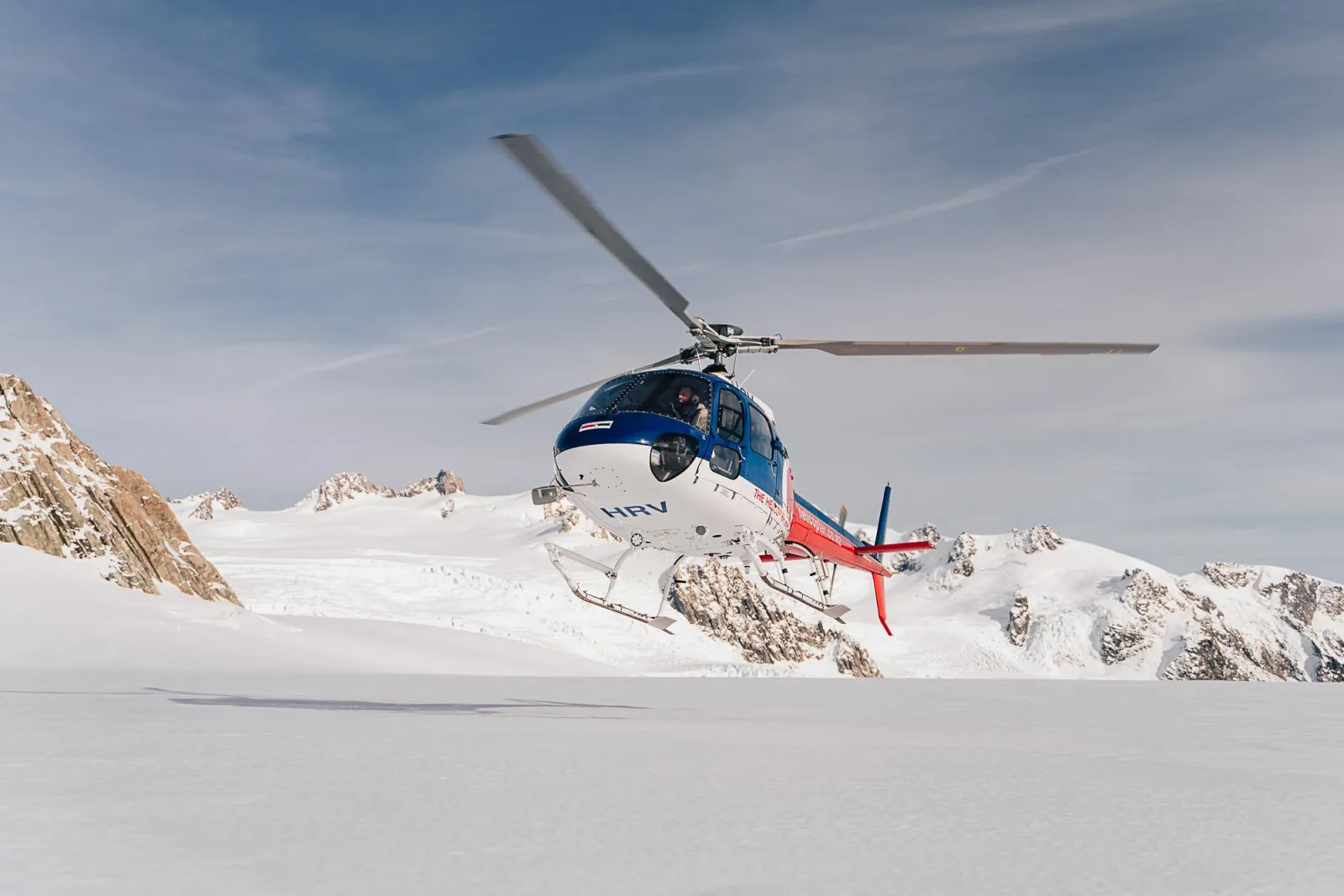
The snow rises towards you until the helicopter seems to hover just above it, then the pilot settles onto a suitable patch. Around the skids you may find deep fresh snow or a firm, packed surface.
Do not open the door and jump out. The pilot or crew tells you when and how to leave the aircraft, and which way to walk. Rotor safety matters even more on uneven mountain ground, so follow the instructions even if you have flown in helicopters before.
There is no window between you and the view now. Depending on the route and the site, you may look across to Aoraki/Mount Cook, the Hochstetter Icefall, the Grand Plateau, the Tasman Valley and its glacier lakes, and the ranges beyond.
This is a stop at a viewpoint, not a hike. You stay fairly close to the aircraft and move only where the pilot says it is safe. It is enough time to take photos, walk a few steps, feel the snow, get a group picture with the helicopter and then put the camera down and look.
INFLITE gives 10 to 15 minutes on the glacier on its combo, Glacier Highlights and Grand Circle flights, and on its ski planes the engine is shut down so you hear the quiet of the ice. The Helicopter Line says you land for about 6 to 8 minutes on the 25-minute Alpine Vista, and its Mountains High listing on Viator gives 5 to 10. That is enough to step out, take photos, throw a snowball and turn around to look at Aoraki.
The advertised flight time includes the landing, so a 45-minute flight is not 45 minutes in the air. That is no drawback: for most travellers we would choose 35 to 45 minutes with a good landing over the same time spent only in the air.
If you want real time on the ice, a heli-hike such as Mt Cook Glacier Guiding’s 3-Hour Tasman Glacier Helicopter Ride and Hike ($569, rated 4.9 from 344 reviews) gives you up to two hours walking on the glacier in crampons.
A scenic glacier landing is not a glacier hike. You can move around the safe area the pilot marks out, but you cannot wander off across the glacier. Glaciers hide crevasses, cracks and snow bridges that change through the season, and the surface is uneven, so passengers stay inside the landing area. To explore the ice itself, book a guided heli-hike, which comes with a guide, boots, crampons and far more time on the glacier.
Pilots pick a landing area clear of crevasses, so the broken ice is something you see from the air. The Hochstetter Icefall, where the ice cracks apart as it drops off Aoraki towards the Tasman, is the big one on the longer routes.
People who walk to the Tasman Glacier viewpoint near the road are often surprised by what they see. The lower glacier is covered in rock and moraine and ends in Tasman Lake, which keeps growing as the ice retreats. It looks grey, not white. The flights land far higher, on the upper snowfields, where the glacier looks the way most people picture one: clean snow, icefalls and crevasses with peaks all round.
The Department of Conservation gives the Tasman as 23 km long, up to 3 km wide and 101 square kilometres, with ice about 600 metres deep near the Hochstetter Icefall. From the valley floor you see one end of it. From the air you follow it far into the mountains, and on the landing you stand in the middle of it. The viewpoint walk is free and short, so do both if you have time: the walk first to see where the glacier ends, then the flight for the scale.
The longer flights cross the Main Divide to the West Coast. INFLITE’s Grand Circle and The Helicopter Line’s Aoraki & The Glaciers both fly over the Fox and Franz Josef glaciers, but you land back on the Mount Cook side: the Grand Circle on the Tasman Glacier, the Helicopter Line flight at a snow site. Seeing three glaciers means one landing, so read the itinerary if you were hoping to step out on the West Coast ice.
No. High sites can stay snowy for months, but lower or sunny alpine sites can lose some or all of their snow in warm weather. The Helicopter Line says snow on its Alpine Vista landing depends on the season, and INFLITE warns that its alpine landing may have no snow in the warmer months.
Your chances are far better. The upper Tasman Glacier keeps snow and ice all year and operators land there in every season, although each landing still depends on the weather and the glacier on the day. If you are travelling in summer and snow is one of the main reasons for the flight, choose a listing that says Tasman Glacier landing, because one that only says alpine landing may be bare.
Do not expect knee-deep powder every time. These are real alpine sites, not groomed ski slopes, and you might find fresh soft snow, packed or wind-blown snow, a crunchy frozen crust, wet spring snow, or bare glacier ice nearby. The surface changes with recent snowfall, temperature, wind, altitude, the time of day and the season.
Yes, you can land on snow in summer. Glacier flights are not a winter activity: the Southern Alps hold permanent glaciers, and glacier-landing flights run all year when the weather allows. The upper Tasman Glacier stays white even when Mount Cook Village is warm, so you can leave the village in sunshine and step out onto bright snow a quarter of an hour later.
No season is best for everyone. Each one gives a slightly different landing.
You get long daylight, easy road-trip weather, room to combine the flight with a walk, and a sharp contrast between green valleys and white glaciers. Some alpine landing sites have less snow, so book a glacier landing if snow matters. Our guide to Mount Cook helicopter tours in December compares the glacier flights.
Autumn often brings crisp, settled days and fewer visitors than the summer peak. Fresh snow becomes more likely at altitude as the season turns.
The ranges look their snowiest, and photographs can be striking. Winter does not mean flying weather, though: storms, cloud and strong wind still cancel flights, and snow and ice can affect the roads into the Mackenzie Basin.
The mountains are still heavily snow-covered, the days are getting longer and the valleys are turning green. The weather is changeable, so keep your plans flexible. More in our guide to Mount Cook helicopter tours in November.
There is no rule that morning flights are better. Mountain weather around Aoraki changes quickly in both directions: a cloudy morning can clear by lunch, and a perfect morning can close in by afternoon. Instead of guessing the best hour months ahead, book your flight early in your stay, keep a later slot or another day free, and let the operator move you if it has to. INFLITE and The Helicopter Line both recommend booking early in your stay for exactly this reason.
The landing sites are colder than the airfield, even in summer, and INFLITE puts the difference at one to three degrees. Dress for the mountain; the airfield will feel warmer:
INFLITE calls sunglasses a must because the glare off the snow is strong. The Helicopter Line asks for a warm jacket, sturdy shoes, sunglasses and sunscreen, and asks you to leave bags, selfie sticks, scarves and loose clothing behind. On a heli-hike, the guides supply boots, crampons and a waterproof jacket.
Not for a scenic landing. Walking shoes, trail shoes or trainers with a decent grip are fine. Leave sandals, flip-flops, smooth-soled dress shoes and heels in the car: the snow can be slippery and uneven.
Both help outside summer. Choose a beanie that stays put over a floppy hat, and skip the loose scarf, which The Helicopter Line lists among the things not to bring on board.
Sun reflected off snow is intense even when the air feels cold, and polarised lenses cut the glare best. Wear sunscreen too: altitude plus the light bouncing off the snow burns faster than the temperature suggests.
Keep it simple: your phone or camera, sunglasses, sunscreen and a warm jacket. A camera on a wrist or neck strap is ideal. The Helicopter Line allows phones and cameras, asks that large cameras are on a strap, and does not allow bags or selfie sticks on board.
The landing is short, so do not spend it changing settings.
Before everyone spreads out, take a wide picture with the helicopter, people and mountains in it. A person in the frame makes the scale much easier to read.
It is tempting to point the camera only at Aoraki. The best photo is often behind you: an icefall, another range, a glacier valley or the helicopter against a ridge.
Phones usually handle snow well, but dedicated cameras can turn bright snow grey. Check one frame and adjust if you need to.
Portrait framing fits a person, the helicopter and a summit into one picture, and suits phone screens and social media stories.
Spend at least 30 seconds just standing there. You have paid a lot for those minutes, so see some of them with your own eyes.
For most people the landing is not the scary part. The helicopter slows right down and comes in carefully, and once outside, the landing area usually feels like a broad mountain viewpoint, not a cliff edge. People who dislike heights often find a scenic flight easier than they expected, because they are sitting securely inside the aircraft. Turbulence varies with the weather, so tell the crew before departure if you are nervous: knowing what comes next helps.
It can happen, although most scenic flights are fairly short. If you are prone to it:
Watching the whole flight through a camera screen makes nausea worse.
Snow, strong wind and sudden temperature changes are possible in any season in the national park, and every landing depends on the conditions on the day. Pilots weigh wind, visibility, rain, the cloud base, the landing site and the snow before they go. Flights can be delayed, rerouted, rescheduled or cancelled, and the listings say routes and landings may vary at the pilot’s discretion, so a landing can move to a different site.
If the flight is cancelled, INFLITE, The Helicopter Line and Southern Lakes rebook you or refund in full. INFLITE makes the final call any time from early morning to about 10 minutes before departure; The Helicopter Line asks you to call an hour before. The listings don’t promise a refund when the flight goes ahead but the landing is moved or skipped, so ask at check-in if that matters to you.
Do not book your flight for the last hour before you leave the region. With two nights at Mount Cook, book for the first day, so there is a second chance if the weather turns. Every GetYourGuide listing here has free cancellation up to 24 hours before.
Sometimes. Aoraki can be partly hidden while another landing site is clear. The opposite also happens: the village can be sunny while cloud or wind higher up rules out a landing. Looking out of your hotel window will not tell you whether the flight will go; the operator and pilot have far better information about conditions at altitude.
Prices depend on the length of the route and on whether the landing is on a mountain site or the glacier. On GetYourGuide, in US dollars per person in October 2026:
Booked direct, the operators charge in New Zealand dollars. INFLITE’s own adult rates in October 2026 were NZ$379 for the 25-minute Tasman Taster, NZ$599 for the combo, NZ$699 for Glacier Highlights and NZ$799 for the Grand Circle, with child rates (0 to 12) of NZ$499, NZ$649 and NZ$749 on the last three. Its direct-only flights add two more: the 25-minute Tasman Discovery ski plane flight with a Tasman Glacier landing from NZ$429, and the 25-minute Aerial Explorer with no landing at NZ$349. A glacier landing is not always a big step up: on 25 minutes, the ski plane onto the Tasman costs NZ$50 more than the helicopter to an alpine site. The Helicopter Line’s website shows NZ$395 for Alpine Vista and NZ$595 for Alpine Explorer, but marks those prices as valid until 30 September 2025, so confirm the current rate before you book direct. Our price guide compares every flight.
For many visitors, yes. If this is your only helicopter flight in New Zealand, we would choose a 30 to 45-minute route with a real glacier landing over the cheapest flight on offer. You get more time to take in the scale of the Alps, a route that reaches further into the glaciers, the experience of standing on a glacier, more reliable snow than a seasonal alpine site, and a landing that feels like a destination in its own right.
A short alpine flight still makes sense if your budget is tight, you are short of time, you mainly want to try a helicopter, you are flying with young children who may prefer a shorter trip, or you already have another glacier trip booked.
Pick this if you mainly want the thrill of a helicopter and big mountain views without paying for the longest flight. A 20 to 30-minute flight can still feel substantial, and it suits first-timers watching the budget.
Pick this if you specifically want to stand on snow or ice. It is the option we suggest to most first-time visitors who can afford the step up.
Pick this if the flight matters as much as the landing. Longer routes reach further into the Southern Alps and, on some itineraries, cross towards the West Coast glaciers. It suits photographers and anyone treating the flight as a highlight of the trip.
On INFLITE’s combo flight you fly up in one aircraft, land on the Tasman Glacier and fly back in the other. It suits aviation fans and anyone who cannot choose between a helicopter and a ski plane.
Children can join scenic flights on both operators’ rules. INFLITE says its flights suit all ages and provides ear protection and child lap belts. The Helicopter Line asks that children fly with a paying adult; infants under 15 kg sit on an adult’s knee and heavier infants need their own seat. For young children who have not flown before, a shorter flight is usually the easier choice. Our families guide has the child rates.
Not necessarily. The crew assigns seats on the day by weight and balance, so not everyone can sit in the front. Visibility is good from every seat, and the scenery is big enough to see from anywhere in the aircraft, so do not build your booking around a particular seat.
Operators may ask for each passenger’s weight when you book and may check it at the airfield. It is a routine aviation requirement: the crew uses it to work out the payload, the seating, the balance and the fuel. Always give an accurate figure.
For most passengers it is easy, but a helicopter cabin is small and there can be a step down to uneven snow. If you have reduced mobility, trouble bending, balance problems or recent surgery, contact the operator before you book and ask whether the aircraft and the landing suit you.
The flights leave from two bases on State Highway 80, and they are not the same place.
Check the departure point on your booking before you set off. Our Mount Cook Airport and Glentanner guide shows where each flight leaves from and how long to allow for the drive.
Allow far more time than the flight itself. INFLITE closes check-in 45 minutes before departure and The Helicopter Line 30 minutes before, and The Helicopter Line asks you to allow about an hour in total for check-in, the safety briefing and the flight on Alpine Vista. Do not plan anything tightly timed straight afterwards, because weather delays happen.
When the operator cancels, you are usually offered another time, another day or a refund under its policy. Cancelling because you decide not to go is a different matter, with different terms: INFLITE asks for 48 hours’ notice and The Helicopter Line 24, while GetYourGuide bookings can be cancelled for free up to 24 hours before. Read your booking terms before you pay.
Operators land in the national park under aviation rules and conservation concessions. The Helicopter Line says its prices include concession fees that go towards conservation and sustainability management. If environmental impact matters to you, compare the operators’ sustainability policies as well as their routes and prices.
The two are often confused. On a snow-landing scenic flight you fly over the mountains, land briefly, step out, take photos and fly back: minutes on the snow. On a heli-hike you fly onto the glacier with a specialist guide, wear boots and crampons, and spend up to two hours on the ice in a trip of about three hours. If you dream of walking among ice formations, book the Tasman Glacier heli-hike; our Tasman Glacier guide compares both heli-hikes.
Both land in the alpine snow, but they feel different. A helicopter lifts straight off, flies close to the ridges, can hover and lands almost anywhere the pilot judges safe. A ski plane takes off and lands on skis, feels more like a conventional aircraft and carries Mount Cook’s long ski-plane history. INFLITE flies both and says the helicopter often gives the feeling of flying closer to the glacier surfaces and icefalls. If you cannot decide, the combo gives you both. Our ski plane vs helicopter guide goes further.
For a first helicopter ride, a few photos, a look at Mount Cook from the air and an alpine landing, yes: 25 minutes can feel surprisingly complete. If Mount Cook is one of the highlights of your New Zealand trip and the budget allows, 35 to 45 minutes gives you time to stop thinking about the flight and take in the landscape. A 50 to 55-minute flight earns its price when you want a much wider Southern Alps route. Our 25, 40 or 55-minute guide compares the lengths.
Here is how the mistake usually happens. One INFLITE flight is NZ$379 for a helicopter ride with an alpine landing, and the listing photos are full of snow. Another is NZ$599 for the combo with a Tasman Glacier landing. You book the first, thinking both put you on the glacier, and in January you step out onto a mountain site with patchy snow. The cheaper flight did nothing wrong; it is a different flight. Look past the photos for the words Tasman Glacier landing.
A listing may show passengers surrounded by white snow, but read the itinerary. If it says alpine landing, the site and the snow cover can vary. If what you want is to step out of the helicopter and stand on a glacier, look for the words Tasman Glacier landing or glacier snow landing, and do not assume every mountain landing gives you the same thing. For a first visit with Aoraki and the glaciers behind you, that is the version we would book.
Our ski plane vs helicopter guide covers the two ways onto the glacier, the combo guide explains the flight that uses both, and the price table lists every flight. For ranked picks, see the best Mount Cook flights, and for the day itself, what a Mount Cook helicopter flight is like. Our breakdown of Mountains High and the homepage comparison have more. When you have a date, check availability.
Guest Reviews
Ratings and review counts are the operators' live figures on GetYourGuide and Viator and may shift slightly day to day.
"Great company, great pilots and staff. We had an amazing experience. We will be back one day for sure :)"
"This is a great way to see Mount cook and the nearby glacier. It also includes a quick stop on the mountain for some more photo opportunities. It is a unique experience and I got a much better look at the mountain top."
"Absolutely fantastic! Everywhere I look, there are beautiful views. It's truly breathtaking."
Read all 7 verified reviews
See All ReviewsForty minutes past the Hochstetter Icefall with a landing in the snow, from $374 per person with free cancellation up to 24 hours before. Starting from $374 per person.
Check Availability & BookWhich flights land on snow, in which months, for how long, and what happens in bad weather.
Most include a landing, but only glacier landings put you on snow in every month. Flights that land on the upper Tasman Glacier, such as INFLITE's ski plane and helicopter combo from $314, land on snow and ice all year. Alpine landings on mountain sites are usually snowy from about April to November and can be bare from December to March. See the combo flight breakdown.
An alpine landing sets down on a mountain site, such as a ridge or peak, where snow depends on the season. A glacier landing sets down on the glacier itself, usually the upper Tasman Glacier, which INFLITE says gives the most certain chance to stand on snow all year. The Helicopter Line also uses 'snow landing' for flights that aim for snow, subject to snow levels.
The high glaciers do. The upper Tasman Glacier has snow and ice all year, so glacier landings are snowy even in January. Lower alpine landing sites are different: INFLITE says its Brass Peak and Liebig Dome sites can lose their snow in the heat of summer, roughly December to March. If you visit then and want snow, book a glacier landing.
No landing is unconditional, because weather and glacier conditions decide it on the day. The dependable choice is a Tasman Glacier landing: INFLITE's combo from $314, Southern Lakes' Tasman Glacier flight from $363, Glacier Helicopters' from $374, or INFLITE's Glacier Highlights ski plane on Viator from $380. Our ranked picks compare them.
It is designed to. The Helicopter Line's Mountains High 40 minute Flight, from $374 per person, flies past the Hochstetter Icefall and the upper Tasman Glacier before a landing in the snow, subject to snow levels on the day. Its Viator listing gives 5 to 10 minutes on the snow. It flies from Glentanner Park, with transport from Mount Cook Village available. Book via the date picker.
Usually 5 to 15 minutes. INFLITE gives 10 to 15 minutes on the glacier and shuts the engine down on its ski planes. The Helicopter Line's 25-minute Alpine Vista lands for 6 to 8 minutes, and Mountains High lists 5 to 10. For longer, a Tasman Glacier heli-hike gives you up to two hours on the ice with a guide, from $569. See our Tasman Glacier guide.
Long trousers, a warm layer or light jacket, closed shoes with a sturdy sole and sunglasses. INFLITE says landing sites are cooler than the airport even in summer and calls sunglasses a must because the snow glare is strong. The Helicopter Line adds sunscreen, and asks you to leave bags, selfie sticks, scarves and loose clothing behind. Heli-hikes supply boots and crampons.
If the flight is cancelled, INFLITE, The Helicopter Line and Southern Lakes rebook you or refund in full, and GetYourGuide bookings here are free to cancel up to 24 hours before. Pilots can also change the route or landing site for weather. The listings don't promise a refund if the flight runs but the landing moves, so ask at check-in if that matters.
Both land on the Tasman Glacier for 10 to 15 minutes with INFLITE. The ski plane lands on skis on the upper snowfields and shuts its engine down for the quiet; the helicopter can also land on mountain ridges. The combo, from $314, flies one way in each. See our ski plane vs helicopter guide.
Yes. INFLITE says its flights suit all ages and provides ear protection and child lap belts, though an infant on a lap is still charged a seat. The Helicopter Line lists no minimum age and seats infants under 15 kg on an adult's knee. Walking on the glacier is different: Mt Cook Glacier Guiding's heli-hike starts at age nine. See our families guide.
No. Every Helicopter Line flight includes a landing of some kind, but some scenic flights, such as Air Safaris' from Lake Tekapo, do not list one. Check the inclusions before you book, and look for the words glacier landing if snow matters.
Yes. INFLITE's combo, Glacier Highlights and Grand Circle flights land on the upper Tasman Glacier, as do Southern Lakes' and Glacier Helicopters' Tasman Glacier flights, when conditions allow.
Yes, within the area the pilot shows you. A scenic landing is not a glacier hike: crevasses and snow bridges make the glacier unsafe to explore alone, so for real time on the ice book a guided heli-hike.
No. For a short scenic landing, sturdy closed shoes with a good grip are enough. Leave sandals, smooth-soled shoes and heels behind, because the snow can be slippery and uneven.
Sometimes. INFLITE says the aircraft fully shuts down on landing on its ski plane and helicopter combo, and its ski planes shut down on the glacier. Procedures vary with the aircraft, the operator and the site.
Yes. A 25 or 45-minute flight is the total trip including the landing, so the time in the air is shorter than the headline figure.
On a seasonal alpine landing, the helicopter may land on bare mountain ground. If snow is essential, book a flight that lands on the Tasman Glacier, which has snow and ice all year.
No. You land in the surrounding Southern Alps, on a ridge or on the glacier. The exact spot depends on the flight, the operator's permits, the terrain and the conditions on the day.
No. A glacier landing is made on the glacier itself, usually the upper Tasman. A snow landing describes the surface, so it can be on a glacier or on a snowy mountain site that is not part of one. Look for the words Tasman Glacier landing if the glacier matters to you.
INFLITE's Tasman Discovery, a 25-minute ski plane flight with a snow landing on the Tasman Glacier, from NZ$429 in November 2026. It is sold only on INFLITE's website. On GetYourGuide, the shortest is the 45-minute ski plane and helicopter combo, from $314.
Yes, its lower end. The lower Tasman is covered in rock and moraine and ends in Tasman Lake, so it looks grey from the viewpoint walk. The flights land much higher, on the white upper snowfields.
Not on the Mount Cook flights sold here. The Grand Circle and The Helicopter Line's 55-minute flight cross the Main Divide to view the Fox and Franz Josef glaciers, then land back on the Mount Cook side, the Grand Circle on the Tasman Glacier.
Still have questions? Email us at info@mountcookhelicoptertours.com
Keep Exploring
Every Mount Cook flight, comparison and planning page on this site, in one place.